10 Things to Check Before You Buy a Used Car
Buying a used car can be a smart financial decision, but only if you know what you are buying. A vehicle that looks clean during a quick walkaround could still have hidden mechanical problems, previous accident damage or overdue maintenance.
Before purchasing a used car in Alpharetta, review its history, inspect its condition, take a thorough test drive and have it evaluated by a trusted mechanic. A little preparation now can help you avoid expensive surprises later.
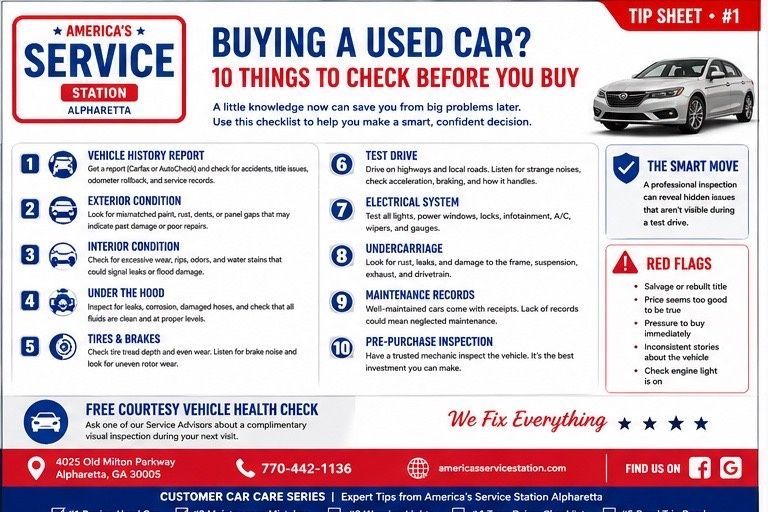
Your Used-Car Buying Checklist
Before you agree to purchase a used vehicle, check these 10 areas:
- Vehicle history report
- Exterior condition
- Interior condition
- Under the hood
- Tires and brakes
- Test drive
- Electrical system
- Undercarriage
- Maintenance records
- Professional pre-purchase inspection
Here is what to look for during each step.
1. Review the Vehicle History Report
Start by obtaining the vehicle identification number, or VIN, and reviewing the car’s history. Services such as CARFAX or AutoCheck may provide information about reported accidents, title issues, ownership history, odometer readings and previous service.
Georgia buyers should also verify that the seller’s name matches the vehicle title and check whether the title has been branded as salvaged, rebuilt or flood-damaged. The Georgia Department of Revenue recommends completing a VIN check before paying for a vehicle or signing paperwork.
You can also enter the VIN into the National Highway Traffic Safety Administration recall database to check for unrepaired safety recalls.
Keep in mind that a clean vehicle history report does not guarantee that a car is problem-free. Not every accident, repair or mechanical issue is reported.
2. Examine the Exterior Condition
Walk completely around the vehicle in good daylight. Look for dents, rust, deep scratches, cracks and body panels that do not align evenly.
Differences in paint color or texture may indicate that part of the vehicle has been repaired or repainted. Uneven gaps around the doors, hood or trunk can also be a sign of previous body damage.
Check the windshield, headlights, mirrors and exterior trim. Open and close every door, along with the hood and trunk, to make sure they operate correctly.
Normal wear is expected on a used car. The goal is to identify damage that may affect the vehicle’s safety, reliability or value.
3. Inspect the Interior
Sit in every seating position and check the upholstery, seatbelts, headliner and flooring. Excessive wear may indicate that the vehicle has been used more heavily than its mileage suggests.
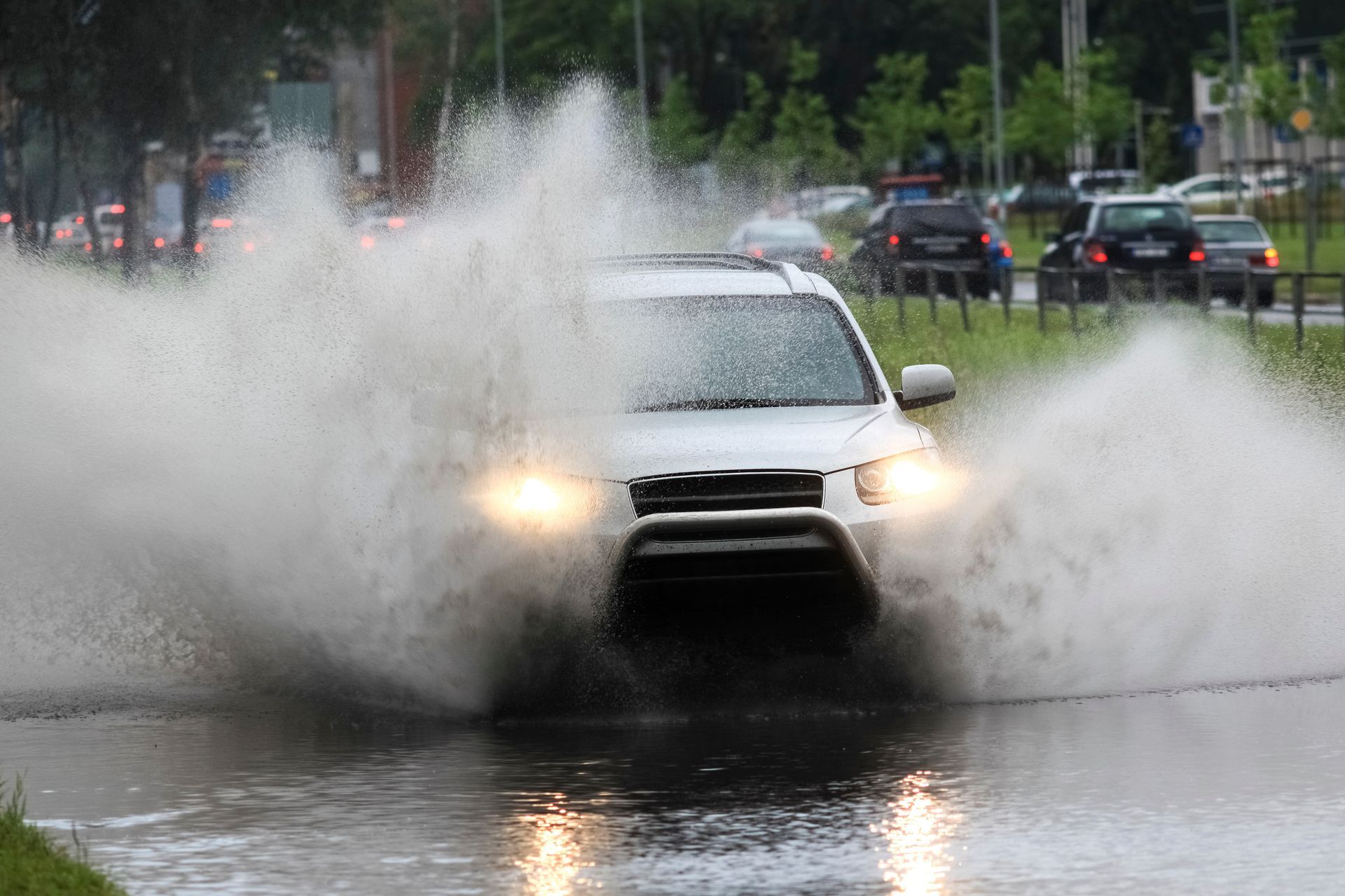
Pay special attention to musty odors, water stains, rust beneath the seats or damp carpeting. These can be warning signs of water intrusion or previous flood damage.
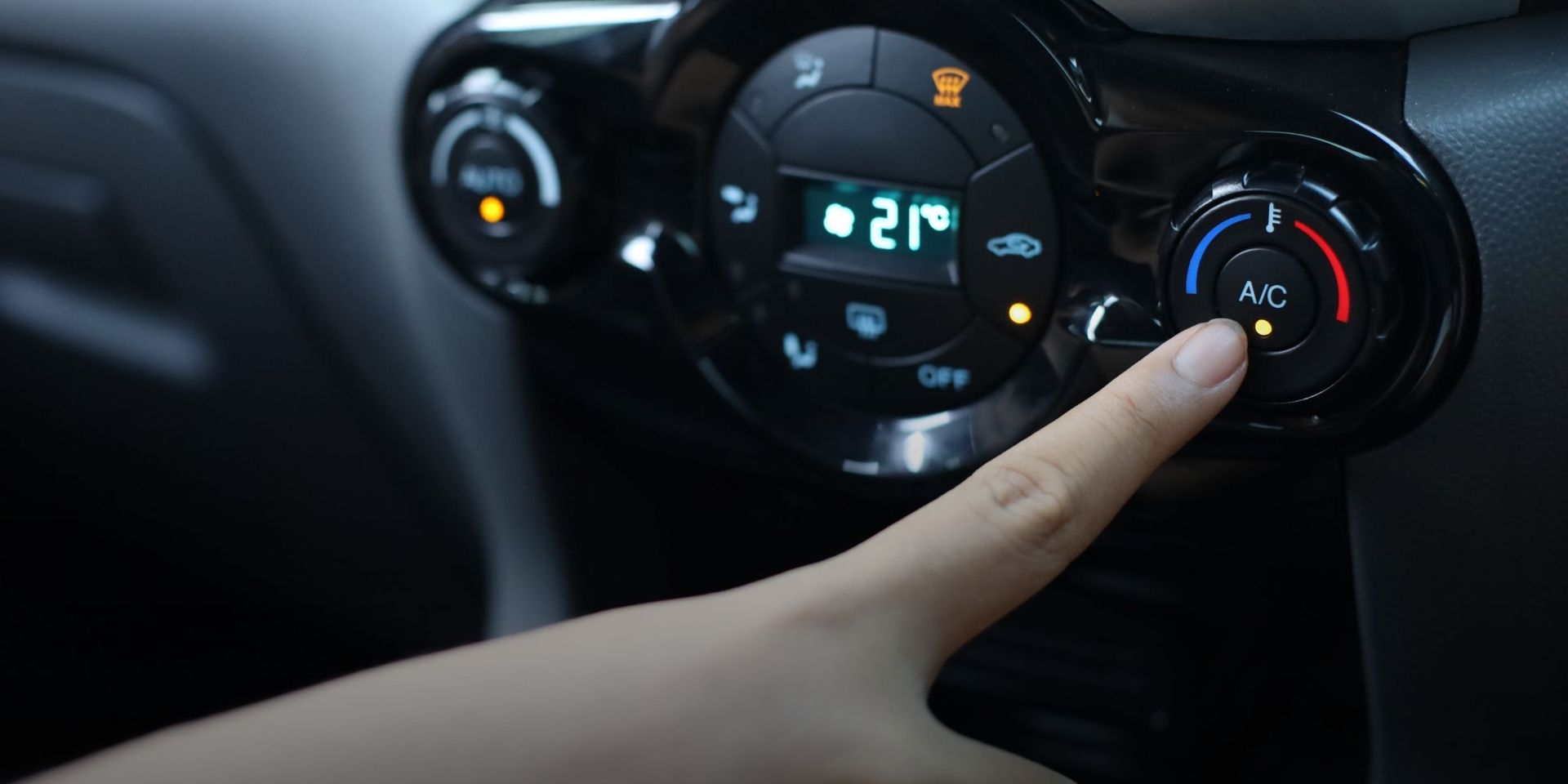
Test the seat adjustments, door locks, windows, mirrors, climate controls and infotainment system. Make sure the air conditioning blows cold, especially when shopping for a used car during an Alpharetta summer.
4. Look Under the Hood
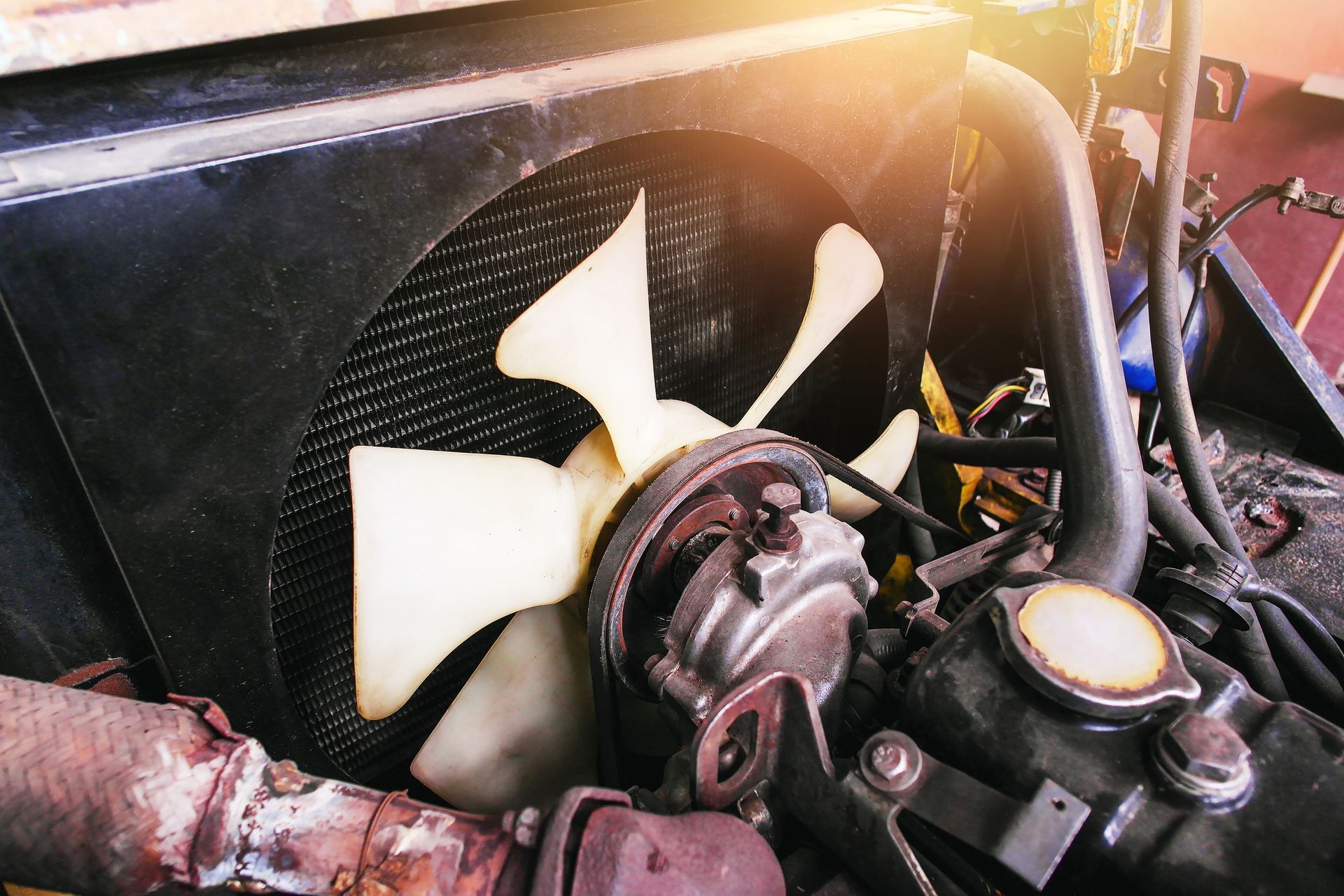
When the engine is cool, inspect beneath the hood for visible leaks, corrosion, cracked belts, damaged hoses or loose connections.
Check the fluid levels and condition when it is safe and appropriate to do so. Very low fluids, burnt smells or unusually dirty fluid may point to neglected maintenance or an existing mechanical problem.
After the vehicle has been running, listen for knocking, ticking, squealing or other unusual sounds. A clean engine compartment is nice, but it should not take the place of a professional mechanical evaluation.
5. Check the Tires and Brakes
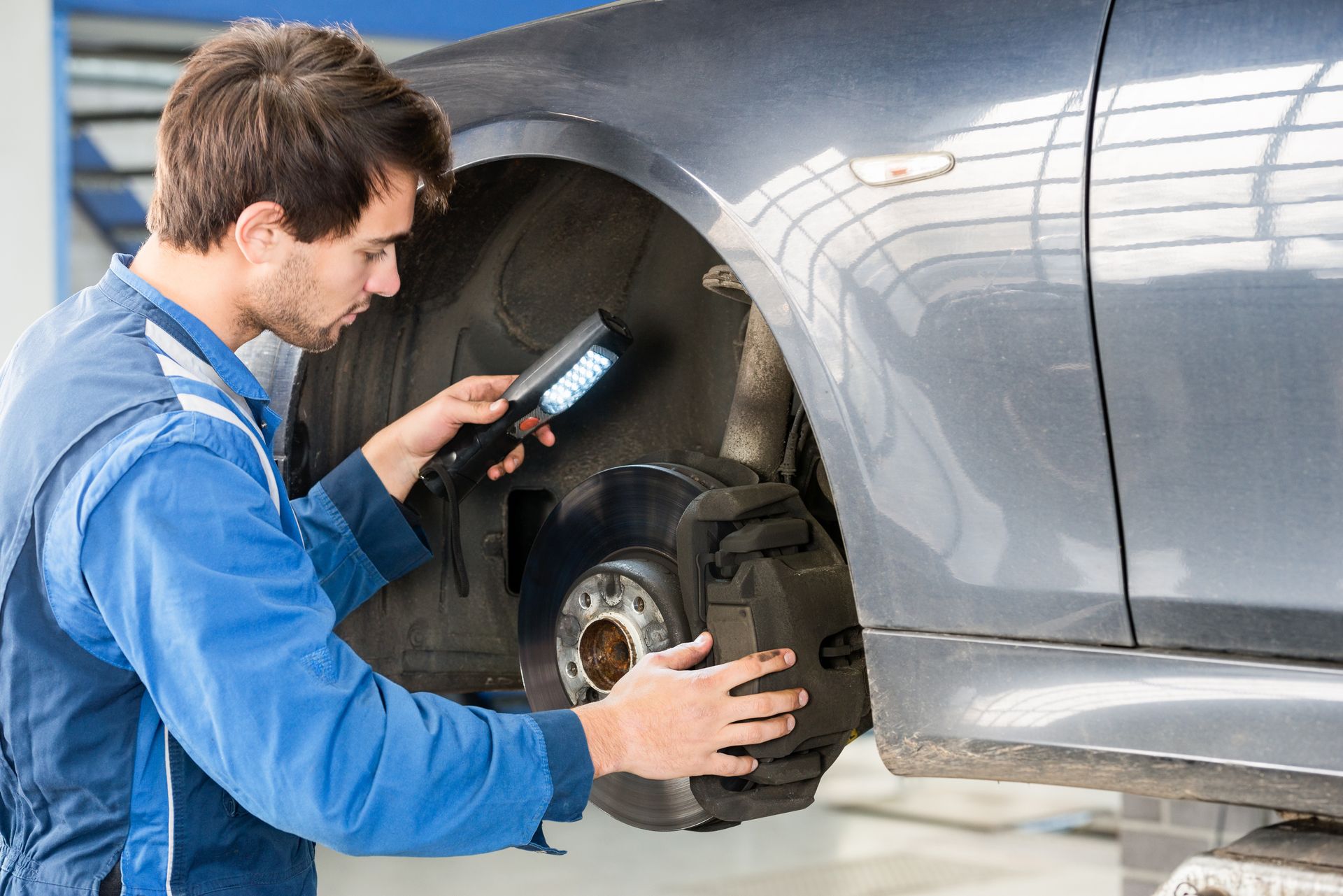
Inspect all four tires for tread depth, cracks, bulges and uneven wear. Uneven tire wear can result from alignment, suspension or tire-maintenance issues.
Make sure the tires are the appropriate size and that their overall condition is reasonably consistent. Replacing four tires soon after buying a vehicle can add significantly to your initial ownership cost.
During the test drive, pay attention to how the brakes respond. Grinding, squealing, vibration, pulling or a soft brake pedal should be investigated before you buy.
6. Take a Real Test Drive
A slow drive around the dealership parking lot is not enough. With the seller’s permission, drive the car on both local roads and a highway when it is safe to do so.
For an Alpharetta-area test drive, this might include normal stop-and-go traffic as well as a short stretch at highway speed. Listen for unusual noises and pay attention to acceleration, braking, steering, transmission shifts and overall ride quality.
The car should track straight without excessive pulling or vibration. Test it at different speeds and try parking, backing up and making both left and right turns.
Do not let the seller distract you with conversation. Turn the radio off for part of the drive so you can listen to the vehicle.
7. Test the Electrical System
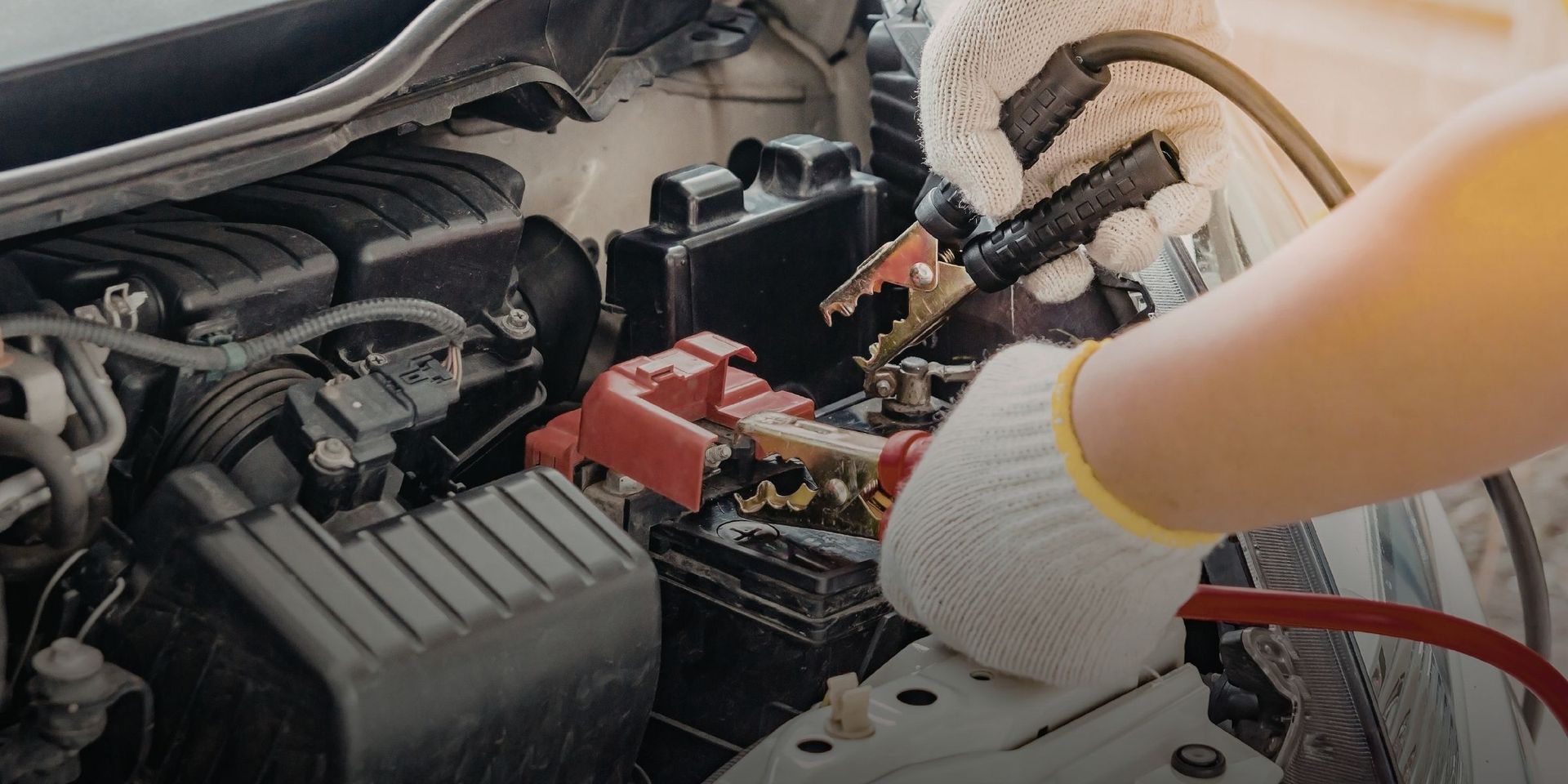
Turn on the headlights, brake lights, turn signals and hazard lights. Test the power windows, locks, mirrors, windshield wipers, horn, air conditioning, heater, audio system, backup camera and dashboard controls.
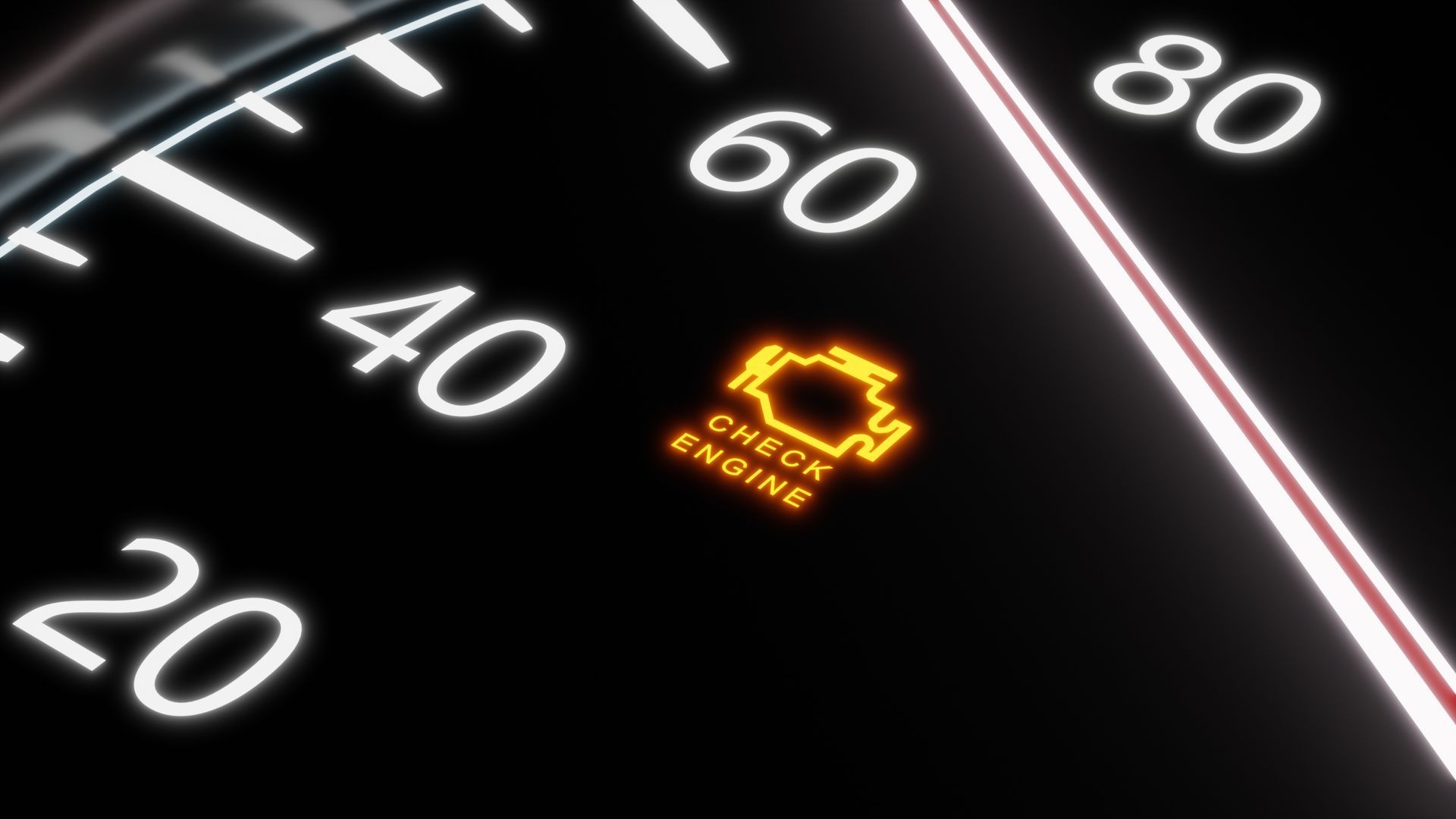
Most dashboard warning lights briefly illuminate when the car is started. They should then turn off. A warning light that remains on may indicate a problem requiring diagnosis.
If a feature is not working, do not assume the repair will be inexpensive. Modern vehicles contain interconnected computers, sensors and electrical components that may require professional testing.
8. Inspect the Undercarriage
Look underneath the car for fluid leaks, rust, damaged panels or components hanging lower than they should. Also check the ground beneath the vehicle after it has been parked.
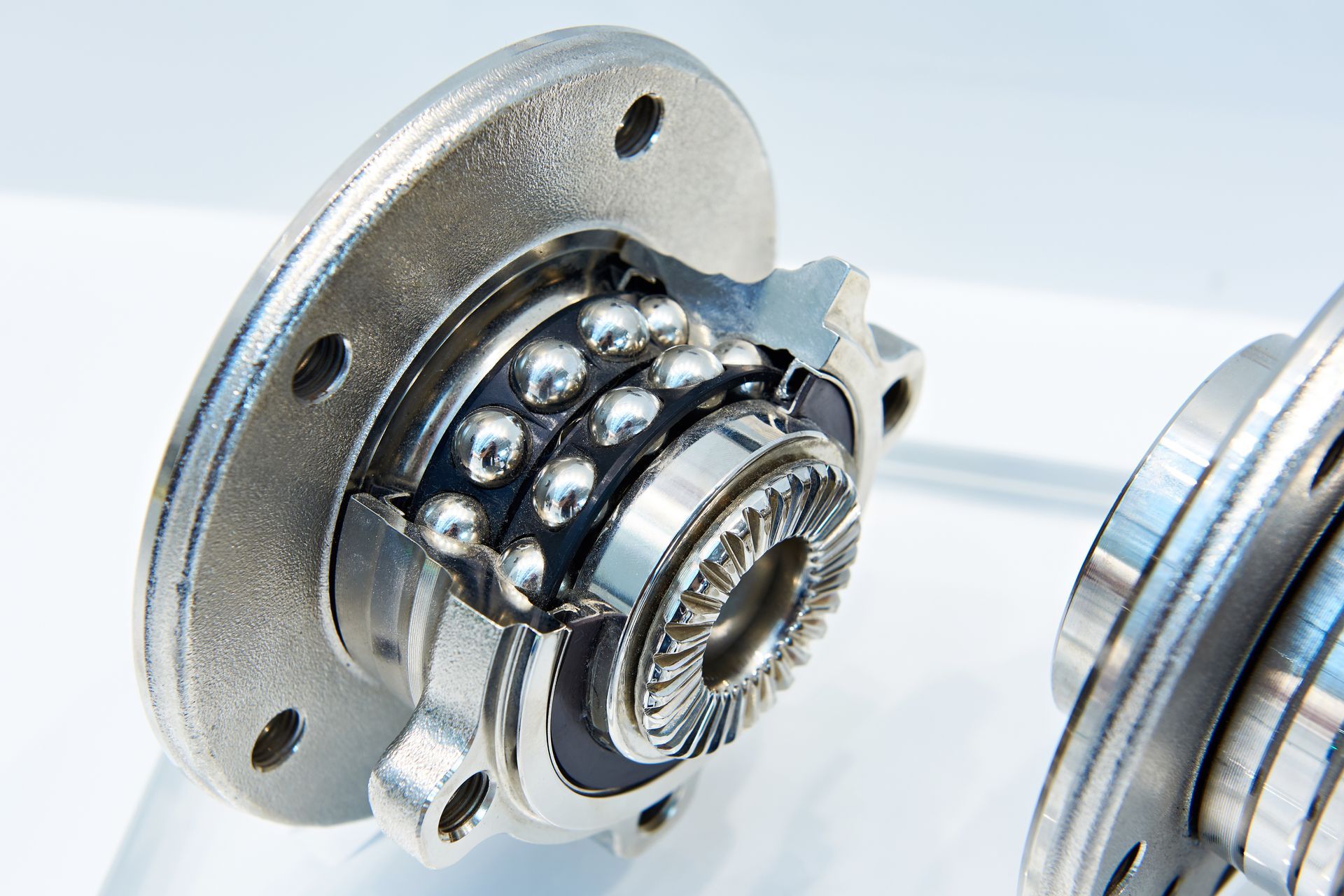
Damage underneath the vehicle can affect the frame, suspension, exhaust system or drivetrain. Some problems are difficult to see without lifting the vehicle, which is one reason a professional pre-purchase inspection is so valuable.
9. Ask for Maintenance Records
A well-maintained car should ideally come with receipts or service records showing regular oil changes, inspections and recommended maintenance.
Compare the records with the manufacturer’s maintenance schedule. Depending on the vehicle’s age and mileage, ask whether larger services, such as transmission service, coolant replacement, spark plugs or timing belt replacement, have been completed.
A lack of records does not automatically mean the vehicle was neglected, but it does create more uncertainty. Factor that uncertainty into your decision and budget.
10. Schedule a Pre-Purchase Inspection
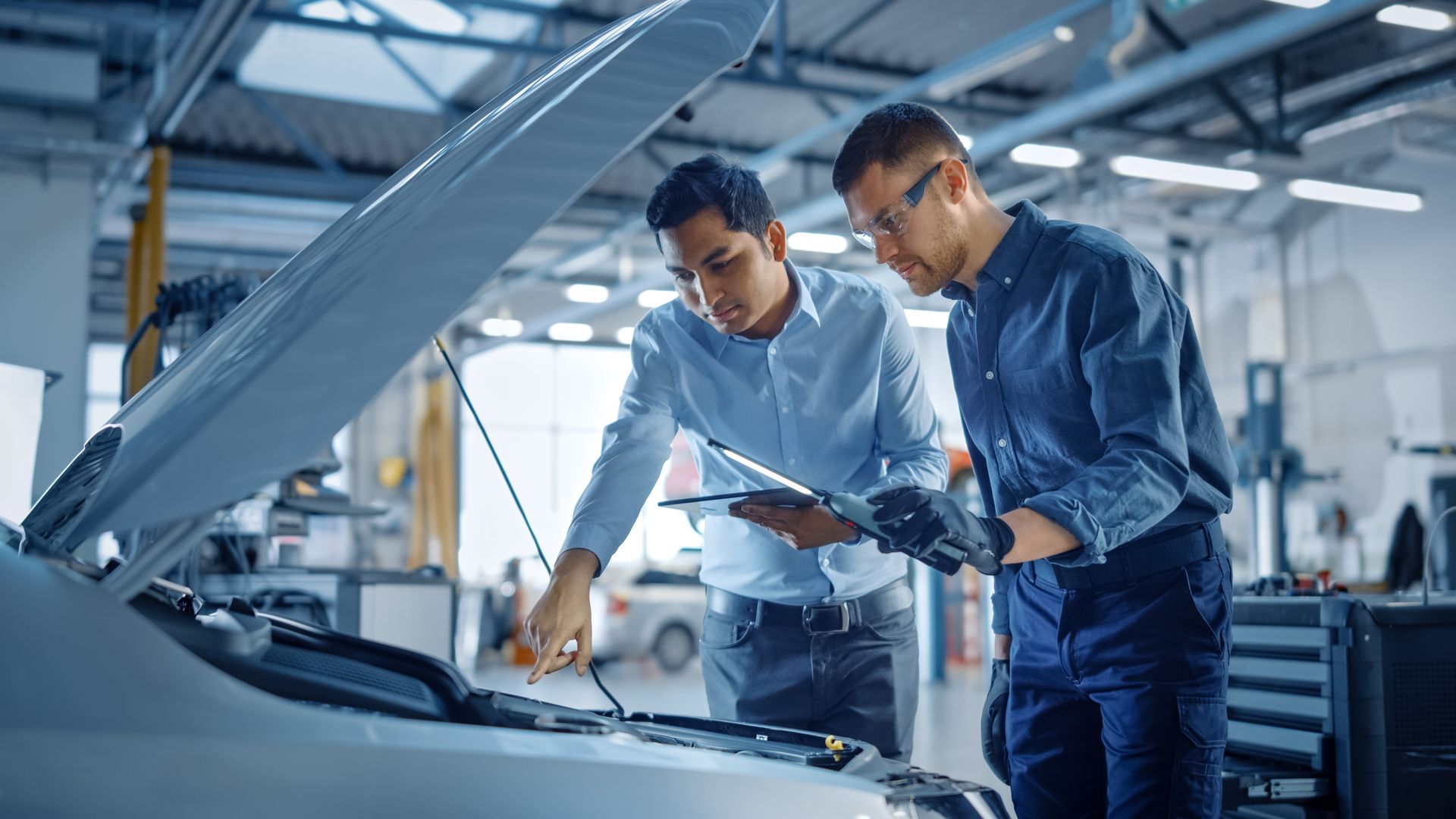
The final, and most important, step is having the vehicle inspected by a qualified mechanic who is not connected to the seller.
A professional inspection can uncover problems that may not appear during a test drive, including fluid leaks, diagnostic trouble codes, worn suspension components, brake issues, cooling-system concerns and evidence of previous repairs.
The Federal Trade Commission advises buyers that a vehicle history report is not a substitute for an independent mechanical inspection - even when the vehicle is advertised as certified or comes with a warranty.
If a seller refuses to allow an independent inspection, consider that a serious warning sign.
Used-Car Red Flags You Shouldn’t Ignore
Slow down or walk away if you encounter any of the following:
- A salvage, rebuilt or flood-damaged title
- A price that seems unusually low for the vehicle
- Pressure to purchase immediately
- Inconsistent explanations about the car’s history
- A seller who will not provide the VIN
- A VIN that does not match the title or paperwork
- Dashboard warning lights that remain on
- Strong odors, water stains or signs of moisture
- A seller who will not allow an independent inspection
It is better to lose one potential vehicle than to inherit someone else’s expensive repair problems.
Get a Used Car Inspected in Alpharetta Before You Buy
A used car may look and drive well while still having problems that are difficult to detect without the proper equipment and experience.
America’s Service Station Alpharetta provides professional pre-purchase vehicle inspections for all makes and models. Our technicians evaluate the engine, transmission, brakes, suspension, steering, tires, fluids, electrical system and overall vehicle condition. You will receive a digital report explaining any issues or red flags we find.
Before you sign the paperwork, let our team help you make a more informed decision.
America’s Service Station Alpharetta
4025 Old Milton Parkway
Alpharetta, GA 30005
770-212-3358
Frequently Asked Questions About Buying a Used Car
What is the most important thing to check before buying a used car?
The most important step is arranging an independent pre-purchase inspection. A vehicle history report provides useful background information, but it may not reveal current mechanical problems, developing leaks or worn components.
Should I get a used car inspected even if it is certified?
Yes. A certified designation or dealer inspection should not replace an evaluation performed by a mechanic you choose. An independent inspection gives you an unbiased assessment of the vehicle’s current condition.
How do I check a used car for recalls?
Locate the vehicle’s 17-character VIN and enter it into the NHTSA recall lookup tool. The VIN is commonly found at the lower edge of the driver’s-side windshield, inside the driver’s door or on the vehicle paperwork.
Can a mechanic tell me whether a used car is worth buying?
A mechanic can explain the vehicle’s current condition, identify needed repairs and help you understand likely maintenance costs. The final decision will also depend on the purchase price, vehicle history and how well the car fits your needs and budget.