There is a specific, sinking feeling that happens when you are driving in a heavy downpour and suddenly realize your steering wheel feels light. It is as if the car is floating on air rather than gripping the pavement. In a way, it is, but instead of air, you are floating on a thin film of water. This is hydroplaning, and it is easily one of the most nerve-wracking experiences a driver can have.
At our shop, we see the aftermath of rainy-day mishaps more often than we’d like. While we are always happy to fix a dented bumper, we would much rather help you avoid the slide in the first place. Understanding why this happens starts with a look at the rubber meeting the road and how tire technology has fought to keep us grounded over the years.
The Evolution of the Rain Groove
In the early days of motoring, tires were essentially solid rubber or very basic pneumatic tubes with smooth surfaces. These worked fine on dry dirt or cobblestones, but they were treacherous in the rain. As cars got faster, the need for a way to channel water became obvious.
The first major evolution was the introduction of tread patterns. Engineers realized that if they cut grooves into the rubber, the water had a place to go. This allowed the rest of the tire to maintain contact with the asphalt. Over the decades, these patterns have evolved from simple vertical lines to complex, computer-aided designs. Modern tires feature:
- Circumferential grooves: These are the deep channels running around the tire that act like rain gutters, evacuating the bulk of the water.
- Sipes: These are tiny, hair-like slits in the tread blocks that create extra biting edges to grip the road surface.
- Hydro-paddles: Many high-performance rain tires now use angled grooves that literally pump water out from under the footprint of the tire at high speeds.
Despite all this incredible engineering, none of it works if the tread is worn down. A tire with no depth is just a racing slick, and on a wet road, a racing slick is a recipe for a spin-out.
Why Tread Depth is Your Only Defense
Think of your tire tread like a series of drainage pipes. When your tires are new, those pipes are wide and deep, capable of moving gallons of water every second. As the rubber wears away through thousands of miles of driving, those pipes get shallower.
Eventually, the grooves become so shallow that they can no longer evacuate the volume of water on the road. When the water can’t escape, it builds up in front of the tire until the tire eventually climbs up onto the liquid. At that moment, your tires are no longer touching the ground. You have lost your ability to steer, brake, or accelerate. You are essentially a passenger in a two-ton sled.
The Rule of Thumb (and the Penny)
We often tell our customers that the legal limit for tread depth is 2/32 of an inch, but honestly, that is cutting it way too close. If you wait until your tires are legally bald to replace them, your stopping distance on wet pavement has already increased by nearly double.
We recommend the 4/32-inch rule for rainy climates. At this depth, you still have enough pipe left to handle a standard rainstorm safely. You can check this yourself with a simple penny. Insert the coin into the tread with Lincoln’s head upside down. If you can see the top of his head, your tires are getting dangerously low. If you want to be even safer, use a quarter. If the tread does not reach the top of Washington’s head, you are at about 4/32 of an inch and should start shopping for new rubber.
Factors That Make Hydroplaning Worse
It isn't just about the tires, though they are the star of the show. A few other things can contribute to that floating feeling:
- Speed: The faster you go, the less time the water has to escape the grooves. Hydroplaning can start at speeds as low as 35 mph if the water is deep enough.
- Vehicle Weight: Lighter cars are actually more prone to hydroplaning because there is less downward pressure to cut through the water film.
- Tire Pressure: Under-inflated tires tend to deflect inward in the center, creating a pocket where water can easily trap and lift the tire.
Let Us Take a Look at America's Service Station
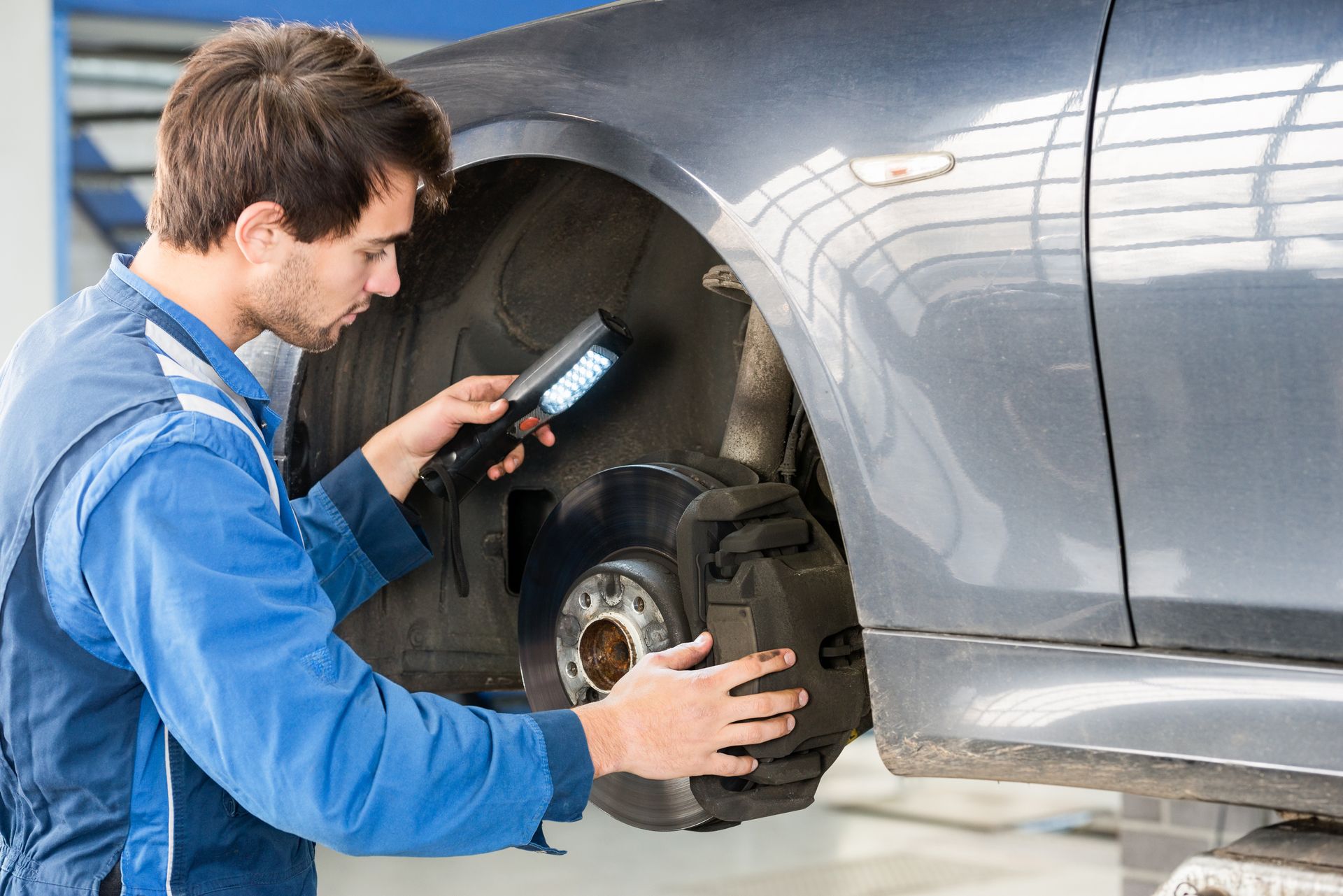
The tricky part about tire wear is that it happens so slowly you might not notice the change in performance until a storm hits. Next time you are near America's Service Station, pull into our bay in Alpharetta, GA. We will do a quick tread depth check and look for uneven wear patterns.
Whether you need a fresh set of all-seasons or just a quick pressure adjustment, we are here to make sure you stay glued to the road no matter what the clouds are doing.
Stay safe out there, and don't let the rain catch you off guard!