Seeing moisture inside a headlight does not always mean the assembly is ruined. Headlights aren't completely airtight, and some have small vents that let pressure and moisture escape as temperatures change. In humid Alpharetta weather, a light haze can sometimes appear after rain, a car wash, or a cool night.
The concern starts when condensation stays for days, large droplets form inside the lens, or water actually collects along the bottom of the housing. That usually means moisture is getting in faster than the headlight can vent it back out.
Some Light Condensation Can Be Normal
Headlight housings heat up when the lights are on and cool after the vehicle is parked. As the air inside expands and contracts, moisture can move through the housing vents.
On a humid day, that air already contains plenty of water vapor. When temperatures fall, some of it can condense on the lens's cooler inner surface. A thin mist that clears after the lights have been on or after several hours of dry weather is generally less concerning than heavy moisture that never goes away.
Blocked Headlight Vents Can Trap Moisture
Those small ventilation passages need to remain open for the headlight to breathe properly. Dirt, leaves, insect debris, or previous repair materials can block them.
When ventilation is restricted, moisture that enters the housing has nowhere to go. You may see the lens clear partially during the day and fog again every morning. During an inspection, we check the vent locations and surrounding housing before assuming the lens seal has failed.
A Cracked Lens or Housing Can Let Water In
A small crack may not be easy to see. Stones, minor parking impacts, heat, and age can create hairline damage in the clear lens or the plastic housing behind it.
Rainwater and car-wash spray can then enter through the opening. If the problem started after a minor front-end impact, that history is useful. We look around mounting tabs, seams, and rear covers because housing can be damaged in an area you cannot see from the front of the car.
Bad Seals Around Bulbs and Access Covers Are Common
Headlights often have removable rear covers so you can service bulbs or electronic components. These covers use rubber seals or gaskets to keep moisture out.
If a cover was installed crooked, left loose, or has a damaged seal, humid air and water can enter directly. The same thing can happen around replaceable bulb sockets.
Common trouble spots include:
- Loose rear dust covers
- Pinched or torn rubber seals
- Missing bulb socket gaskets
- Covers installed incorrectly after bulb replacement
- Damaged wiring pass-through seals
- Cracked mounting areas near the rear of the housing
These are worth checking before replacing an expensive complete headlight assembly.
Pressure Washing Can Force Water Past Good Seals
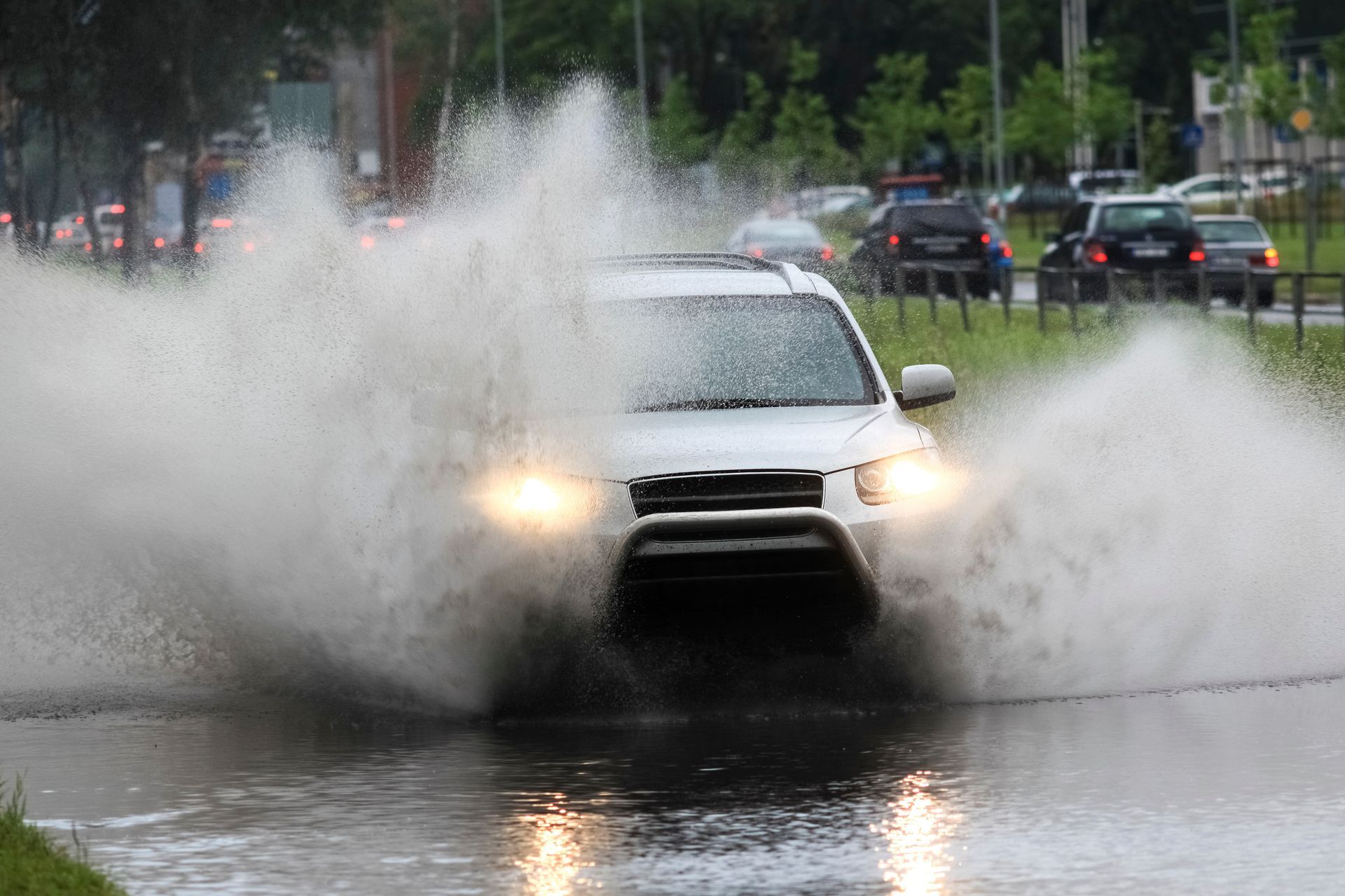
A headlight that stays dry during normal rain can still take on water if you aim a high-pressure washer directly at seams, vents, or rear covers.
Water under pressure can get through openings that would normally resist ordinary weather. If fogging appears immediately after washing the engine bay or spraying close to the headlights, give the housing time to dry, then watch whether the moisture returns under normal conditions.
Repeated fogging after ordinary rain points more strongly toward a seal, vent, or housing problem.
Water Inside Can Damage Modern Headlight Electronics
Modern headlights contain much more than bulbs. Depending on the vehicle, the assembly can include LED drivers, control modules, leveling motors, adaptive-lighting motors, and electrical connectors.
Standing water can corrode terminals and damage those electronics. You may eventually see a headlight warning, flickering, one light shutting off, or an adaptive function no longer working.
At our shop, we take persistent water intrusion more seriously on these assemblies because ignoring a small seal problem can become an expensive electrical repair.
Drying the Headlight Is Only Half the Repair
If water has entered the housing, removing the moisture helps, but the job isn't finished until you find the entry point. Otherwise, the lens will simply fog again after the next humid day or rainstorm.
Depending on the cause, the repair may involve clearing a vent, replacing a rear cover or gasket, resealing a serviceable seam, or replacing a cracked housing. Some modern headlight assemblies are not designed to be opened and resealed easily, so replacement can be the more dependable option when the main housing has failed.
Avoid drilling random holes into the bottom of the headlight. This can introduce dirt, insects, and more moisture without fixing the original leak.
Watch for Moisture That Keeps Coming Back
A brief haze after a major temperature change is different from recurring droplets or standing water. Pay attention to how quickly the moisture clears and whether it returns after every rain.
Regular maintenance lets us catch loose covers, cracked housings, and damaged seals before water reaches the electronics. If only one headlight repeatedly fogs while the other stays clear under the same conditions, that is another strong clue that the affected assembly has a specific sealing or ventilation problem.
Get Headlight Repair In Alpharetta, GA, With America's Service Station
If your headlights keep fogging, develop water droplets inside, or start showing lighting faults, America's Service Station in Alpharetta, GA, can check the housing, vents, seals, covers, and electrical components to find the source of the moisture.